
Adding solar panels is one of the most effective ways to cut energy bills and reduce your carbon footprint. However, many homeowners are unsure about the planning rules involved. The good news is that in most cases, you won’t need formal planning permission if your system meets permitted development guidelines. This means your installation can go ahead quickly and with less hassle, provided it follows specific size, placement, and appearance rules designed to protect the look of your property and neighbourhood.
Before you proceed, it’s important to check these guidelines carefully, especially if your home is in a conservation area or is a listed building, as extra permissions may be needed.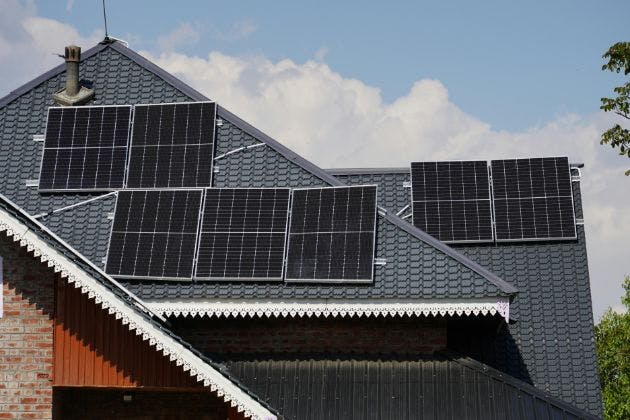
Permitted development vs planning permission
In simple terms, permitted development means certain types of building work are allowed without making a full planning application. Solar panels on homes are often included in this, provided they meet specific conditions.
Planning permission is a formal process where the local authority considers an application in detail. With solar, this is usually only needed where the installation is particularly visible, large, or affects a protected building or area.
National guidance sets the broad rules, but local planning teams interpret and apply them in their area. That means the exact approach can differ slightly, so it is always worth double-checking before going ahead.
Typical situations where solar is usually permitted
On many standard houses, roof-mounted solar can be installed under permitted development. This tends to be more straightforward when the property is not listed and not in a conservation area, and the panels follow the line of the roof.
Generally, the system should be as unobtrusive as possible. That means panels sitting close to the roof surface, not projecting too far, and not significantly altering the building’s appearance from the street.
Panels mounted flush or nearly flush with a pitched roof
Equipment kept below the highest part of the roof (excluding chimneys)
No major alterations to the building’s overall profile or shape
Minimal visual impact from public viewpoints where possible
For many modern or post-war homes on typical streets, a well-designed roof array will often fall into this category, but the final call always sits with the local planning authority.
Common scenarios that need extra checks
Some properties and locations trigger more detailed planning considerations. This does not mean solar is impossible, but you may need advice or formal consent before proceeding.
Listed buildings and heritage features
If your home is listed, solar panels require special care. In many cases, listed building consent will be needed, and the planning team will look closely at the visual impact on the historic character.
Panels on principal elevations, highly visible roof slopes, or affecting original materials can be more contentious. Sometimes, heritage-friendly options such as rear roof slopes, outbuildings, or integrated systems may be explored instead.
Conservation areas and more prominent streets
Parts of the city fall within conservation areas that exist to protect the character of historic streets and neighbourhoods. Within these, solar can still be possible, but the acceptable locations may be more limited.
Panels on the front or “principal” elevation facing the highway are more likely to draw attention from planners. A less visible side or rear roof slope may be favoured, even if it gets slightly less sun.
Prominent elevations and visibility from the highway
Even outside conservation areas, planners pay particular attention to what can be seen clearly from the road or public footpaths. A prominent front-facing roof full of highly reflective panels may be queried.
Keeping arrays to roof slopes that are less obvious from the street, or using neat, well-aligned panel layouts, can help stay within permitted development and keep neighbours on side.
Unusual mounting angles and flat roofs
Permitted development usually expects panels to follow the existing roof pitch. Where you change the angle significantly, for example by using raised frames on a pitched roof, the installation can look more like a new structure and may need consent.
Flat roofs are another area for caution. Small tilt frames are often used to get a better angle to the sun. If these are low-profile and set back from the roof edge, they may be acceptable under permitted development, but highly visible, tall frames could tip the balance towards needing planning permission.
Battery storage and other equipment
Many modern systems include a battery, an inverter and isolators. These usually fall under permitted development if they are kept tidy and unobtrusive, but their placement still matters.
Equipment cabinets or housing fixed to external walls, or units in front gardens or driveways, can attract attention. Where possible, keeping them inside, in garages, or on less visible side elevations is generally better for both planning and aesthetics.
Before you book: a simple homeowner checklist
Before arranging a survey or committing to an installer, doing a little homework will put you in a stronger position and help flag any potential planning issues early.
Photograph your roof from the front, sides and back, including wider shots that show nearby houses and the street.
Check if your home is listed or sits within a conservation area using local authority maps or online tools.
Note where panels might go (front, side, rear, or flat roof) and how visible those areas are from the highway.
Ask your installer about mounting profiles, whether panels will sit close to the roof, and proposed battery locations.
With this information, you and your installer can have a meaningful discussion about whether the project appears to fall within permitted development or if a planning enquiry would be sensible.
Checking with the local planning authority
Because planning rules are interpreted locally, it is always wise to confirm the position with your council, especially if you are in a conservation area, own a listed building, or have an unusual roof layout.
Many councils offer pre-application advice or can guide you towards relevant online resources. This can be particularly helpful before investing in detailed designs or placing an order.
Requirements and interpretations can vary between areas. For example, homeowners in places like Crawley should check with their own local planning team, rather than assuming another council’s guidance will apply in the same way.
Plan your solar project with professional support
Solar installations sit at the intersection of planning rules, electrical safety and good design. Working with an experienced installer who understands both the technical side and local planning sensitivities will make the process far smoother.
If you would like tailored advice and a site survey, you can learn more on our Brighton solar installation page, read about our full range of services on the main solar PV installation page, or contact us to arrange a visit. RESISTANCE ELECTRICAL LIMITED can talk you through the planning considerations for your home and provide a clear, no-obligation quotation. To get started, give us a call on 07935923323.