If your RCD keeps tripping, it can be both frustrating and worrying, especially when it happens at the most inconvenient moments—like during a busy evening or in bad weather. Before you start flicking switches on and off at random, it’s crucial to understand which checks are safe for you to carry out and when it’s essential to stop and call a qualified electrician. Attempting repairs or investigations beyond basic troubleshooting can be dangerous, so knowing your limits helps protect you and your home. Taking the right steps early can also save time and reduce the risk of further damage or electrical hazards.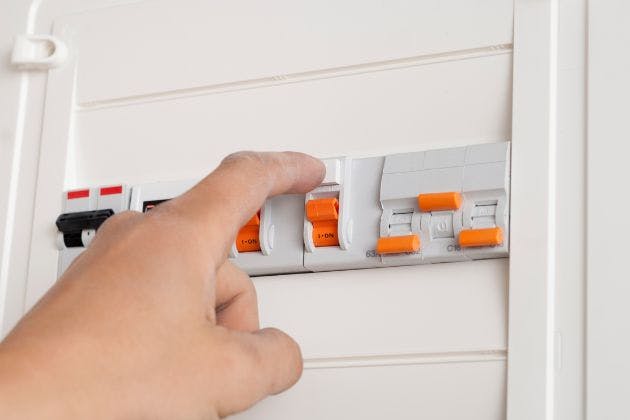
Safety warning before you touch the consumer unit
Electricity can be extremely dangerous. You should never remove covers from your consumer unit or work on wiring yourself. Your role as a homeowner is limited to using the switches and unplugging appliances.
Stop immediately and call an electrician if you notice any of the following:
A burning smell from the consumer unit, sockets or switches
Noticeable heat, scorch marks or discolouration around electrical accessories
Loud buzzing, crackling or popping noises from the fuse box or a socket
Water, damp or condensation in or around sockets, switches, outdoor fittings or the consumer unit
The RCD trips instantly every time you reset it, even with all breakers turned off
If any of these are present, do not keep resetting the RCD. Turn the main switch off if it is safe to reach, keep the area clear and contact a qualified electrician as soon as possible.
What your RCD or RCBO actually does
An RCD (Residual Current Device) constantly monitors the balance of electricity flowing in and out of a circuit. If it detects even a small leakage to earth, it cuts the power in a fraction of a second to protect you from electric shock and reduce fire risk.
An RCBO combines an RCD and an MCB (miniature circuit breaker) in one device. It protects against both earth leakage and overloads or short circuits. When one of these trips, it is usually a sign that it is doing its job properly because something is not quite right on the circuit.
Frequent tripping is a message, not a nuisance to be ignored. The aim is to find what is causing the trip, not to force the device to stay on.
Safe step-by-step checks when the RCD keeps tripping
These steps are designed to be simple and safe for most homeowners. If you ever feel unsure, stop and call an electrician rather than pushing on.
Step 1: A calm reset sequence
First, go to your consumer unit and identify the main RCD that has tripped. Turn all individual circuit breakers (or RCBOs) to the OFF position, then try to reset the RCD.
If the RCD will not reset even with everything off, stop there and call an electrician. If it does reset, turn the individual breakers back on one at a time until the RCD trips again. The breaker you were turning on when it tripped is likely linked to the faulty circuit.
Step 2: Unplug appliances on the suspect circuit
Once you know which breaker is related, switch it OFF. Walk around the areas it supplies and unplug every appliance from its socket. Pay attention to high‑load items like kettles, toasters, irons, ovens, washing machines and tumble dryers.
With everything unplugged, turn the breaker back ON, then reset the RCD if needed. If it now holds, plug appliances back in one by one, switching each on in turn. When the RCD trips again, the last item you plugged in is a strong suspect.
Step 3: Check outdoor circuits and damp areas
Circuits feeding outdoor sockets, garden lighting, ponds, garages and sheds are especially prone to moisture problems, particularly around Brighton, Hove and other coastal areas where damp and salt in the air are common. Bathrooms, kitchens and utility rooms are also higher risk.
With the relevant breaker OFF, look (do not touch anything wet) for obvious signs of trouble such as condensation in outdoor socket covers, water pooling around fittings, green staining or corrosion, or broken covers that let rain in.
Step 4: Look for obvious damage to leads and sockets
Damaged flexes and worn sockets are another frequent cause of nuisance RCD tripping. Unplug appliances and check their leads for cuts, kinks, exposed copper or crushed sections under furniture.
Similarly, look at sockets and switches for cracks, loose fronts or signs of scorching. If you see any of these, do not use that point again until it has been inspected and repaired by an electrician.
Step 5: Note patterns and behaviour
If your RCD only trips at certain times or with certain activities, that information really helps fault finding. Make a simple note of:
Which circuits trip (sockets, lights, cooker, shower, etc.)
What was running at the time (for example, washing machine on spin, kettle and toaster together)
Time of day or weather conditions, especially heavy rain or strong winds
Sharing these details with your electrician can speed up the diagnosis and reduce the time spent on site.
Common reasons an RCD keeps tripping
While every property is different, some issues turn up again and again in homes around Brighton, Hove, Crawley, Eastbourne and Worthing.
A few of the most common are faulty appliances such as washing machines, dishwashers, immersion heaters and old fridges or freezers. Internal insulation can break down over time, allowing small leaks of current that your RCD will pick up.
Damaged or loose sockets, especially ones that have taken a few knocks, can also cause intermittent trips. Outdoor sockets, garden lighting and hot tub supplies often suffer from moisture ingress, particularly after heavy rain or in exposed coastal gardens.
Other possibilities include loose connections within accessories, gradual insulation breakdown on older cabling and general overloading where too many high‑power appliances end up on one circuit. Aged accessories and older consumer units are simply more prone to issues and often benefit from upgrading.
What a qualified electrician will check and test
Knowing what to expect can make the whole process less stressful. A good electrician will start with questions about when the RCD trips and what you have already tried. They will then carry out a visual inspection of the consumer unit, key sockets and any obvious problem areas.
Using calibrated test equipment, they can perform insulation resistance tests, earth leakage measurements and polarity checks to identify which part of the wiring or which appliance is at fault. They may temporarily isolate circuits to narrow things down safely.
If your consumer unit is older or lacks modern RCD/RCBO protection, they might suggest options such as a consumer unit upgrade to improve safety and reliability. For broader peace of mind, they may also recommend periodic testing and inspection (EICR) to check the whole installation, especially in older properties or homes near the coast.
When to stop DIY checks and get expert help
If your RCD still trips after unplugging appliances, checking for obvious damage and trying a simple reset sequence, it is time for professional electrical fault finding. Persistent or unexplained tripping should never be ignored or bypassed.
For friendly, expert help with RCD tripping, nuisance faults and safe electrical fault finding in Brighton, Hove, Crawley, Eastbourne, Worthing and surrounding areas, contact Resistance Electrical on 07935923323. A qualified electrician can diagnose the issue properly, make your system safe and get your power back on with confidence.