
If you live in Sussex and are thinking about installing solar panels, the first step is to assess how suitable your roof is. You can start with a quick visual check from the ground to spot any obvious issues like shading or roof orientation. Then, take a few simple steps inside your home, such as inspecting your loft and checking the condition of rafters and wiring. These easy checks give you a clearer idea of your roof’s potential before you arrange a professional site survey with an installer.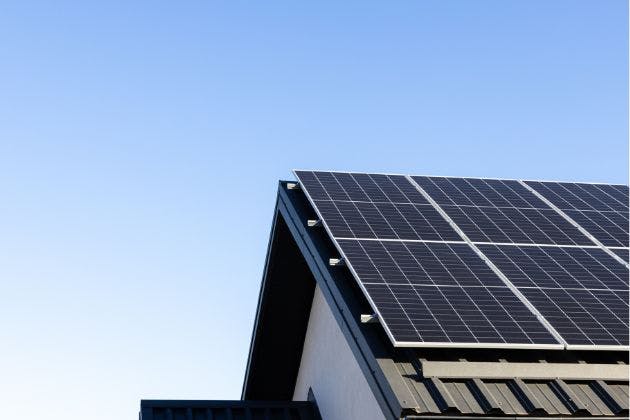
Quick roof suitability checklist for Sussex homes
Most homes in Brighton, Crawley and across Sussex can take solar, but some are a better fit than others. Use this simple checklist to get an initial feel for your roof, then follow the sections below for more detail.
Roof faces mainly east, south or west with a decent clear area
Pitch between roughly 15° and 45° (typical pitched roof)
Tiles or slates in good condition, or a sound flat roof surface
No heavy shading from chimneys, dormers, trees or nearby buildings
Roof structure appears solid with no major sagging or leaks
Electrics reasonably up to date with spare capacity in the consumer unit
If you can tick most of these, your home is likely to be a good candidate, and a professional survey can confirm the details.
Orientation, pitch and roof covering
In the UK, a south-facing roof gives the highest output, but east and west-facing roofs in Sussex can still work very well. North-facing roofs are usually less suitable, although they can sometimes be used in split systems with other roof faces.
Most standard-pitched roofs fall between 30° and 45°, which is ideal for solar in our climate. Shallow pitches down to around 15° can still perform well. Very steep or unusual roofs may still work, but need careful design by your installer.
Concrete tiles, clay tiles and natural slate are all commonly used for rooftop solar. Panels are mounted on brackets fixed to the rafters under the coverings, so the surface needs to be sound and weather tight. Flat roofs can take solar too, usually with a special frame that tilts the panels and is either weighted or fixed into the structure.
Roof condition and structural considerations
Before adding solar, it is important that the roof is in good general condition. If your tiles are crumbling, slipping or you have recurring leaks, it is usually better to fix or re-roof first so new panels are not disturbed soon afterwards.
Indoors, look in the loft with a torch. You are checking that rafters and purlins look straight, reasonably dry and free from significant rot. A little surface discolouration on older timbers is common, but soft, crumbling or heavily cracked wood should be flagged to a professional.
Solar panels add weight, though not usually as much as people expect. A competent installer or structural engineer can assess the loading on older or lightweight roofs, especially on coastal properties that may have experienced historic wind damage.
Shading and wind exposure in Sussex
Shading has a bigger impact on solar performance than most people realise. You will want to look at the roof throughout the day if possible, not just at midday. Early morning or late afternoon shade from tall trees or neighbouring houses can reduce output.
Common shading sources include chimneys, dormer windows, TV aerials, satellite dishes and nearby roof features. In many cases, panels can be laid out to work around these, leaving a clear rectangle of modules on the best part of the roof.
In coastal parts of Sussex, such as Brighton, Shoreham or Worthing, wind exposure is a key consideration. Installers allow for this in the fixing method, spacing of brackets and choice of mounting kit, all designed to meet UK wind loading standards.
What installers look for during a site survey
A professional survey goes beyond the quick checks you can do yourself. The surveyor will usually inspect the roof from outside, then look inside the loft if access is safe and practical.
Loft and roof structure checks
In the loft, the installer will check the size and spacing of rafters, the condition of timbers, and how the roof is braced. They may take measurements to plan where brackets and rails will sit so loads are spread correctly.
They will also look at insulation levels and any boarding or stored items that might restrict access. Clear access paths help them plan a safe working method during installation.
Access and scaffold considerations
Outside, the survey will assess how easily the roof can be reached. Factors include the height of the building, nearby obstacles such as conservatories, and how close scaffolding could be placed.
Good access makes the job safer and helps protect your property during lifting and panel placement. On tight terraced streets in Brighton and older parts of Crawley, extra thought may be needed for scaffold design.
Electrical checks inside the property
Solar needs to tie into your existing electrics neatly and safely. The surveyor will inspect your consumer unit (fuse board) to see if there is physical space for an extra circuit breaker and whether the overall arrangement looks up to date.
They will usually check earthing and bonding arrangements in line with current wiring regulations. Space for AC and DC isolator switches is also considered, often near the consumer unit and close to where the inverter will be located.
Workarounds for shading, roof area and layout
Even if your main roof is not perfect, there are often design options that can still make solar a good fit for your home. Installers have several tools to deal with partial shading and awkward roof shapes.
Panel optimisers or microinverters can help reduce the impact of shading on one or two modules, so the rest of the system continues to perform well. These devices manage each panel individually, rather than treating the whole string as a single unit.
Where roofs face different directions, panels can be split into separate arrays, such as part on a south roof and part on a west roof. In other cases, garages, outbuildings or flat roof sections can provide excellent spaces for solar, keeping panels accessible and neatly laid out.
Planning rules and building regulations
Most domestic solar installations in England fall under permitted development, so you usually do not need full planning permission. However, there are exceptions, especially in conservation areas and on listed buildings, which are common in historic parts of Sussex.
If your home has any special planning status, it is worth checking with the local planning authority before proceeding. Your installer should also ensure that the system complies with building regulations, including electrical safety, structural loading and, for certain works, any notifications that need to be made.
Next steps: book a survey and get tailored advice in Brighton, Crawley, and Hove
Working through this checklist should give you a clear idea of whether your roof in Brighton, Crawley or wider Sussex is likely to be suitable for solar. The final step is a proper site survey to confirm the details and design a system that suits your home.
If you are ready to move forward, you can arrange a friendly, no-obligation survey with Resistance Electrical. Visit our solar services page. To talk through your options directly, call Resistance Electrical on 07935923323 and we will be happy to help.