Solar PV with battery storage lets you capture and store the energy your panels generate during sunny periods, so you can use it whenever you need, even when the sun isn’t shining. This system helps reduce your reliance on the grid, saving you money and lowering your carbon footprint. In the UK, where sunlight can be unpredictable, having battery storage means you won’t waste excess energy and can keep your home powered efficiently. Knowing how the solar panels, batteries, and your home’s electrical system work together helps you choose the best setup for your property and maximise your energy independence.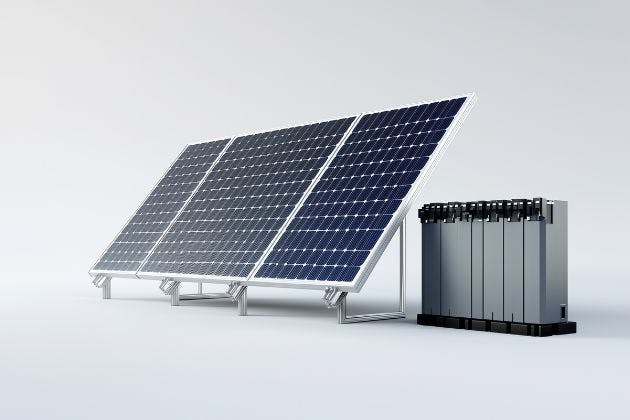
How solar PV powers your home day to day
Solar PV panels on your roof convert daylight into direct current (DC) electricity. That DC power is sent to an inverter, which turns it into alternating current (AC) that your home circuits and appliances can use.
Once converted, the solar power simply joins your normal household wiring. Your lights, sockets and appliances use the solar energy first, and any extra demand is automatically topped up from the grid, without you having to switch anything.
If your panels are generating more than your home is using at that moment, the surplus will either charge your battery (if you have one) or be exported to the grid through your electricity meter.
Exporting solar energy back to the grid
Most modern solar setups have a smart meter that can measure what you export. When your batteries are full and your home is using very little power, the excess is sent out to the local network.
If you are on a Smart Export Guarantee (SEG) tariff, your supplier pays you for each kilowatt hour you export. You do not control this manually; the system and the grid interact automatically as long as everything is wired and commissioned correctly.
Export settings are usually limited to meet local network rules. A good installer will handle the application to the Distribution Network Operator (DNO) so that the system is approved and set up safely.
How battery storage charges and discharges
A home battery is like an energy buffer that sits between your solar system and your home’s electrical circuits. It stores excess energy when you have more generation than demand and releases it when your home needs it.
During sunny periods, surplus solar power charges the battery first before exporting
In the evening or on dull days, the battery discharges to supply your home
Once the battery is empty, your home draws power from the grid again
Some systems can also charge from the grid on cheap overnight tariffs
Battery charging and discharging are controlled by the inverter or a separate battery controller. You can usually see all of this in a monitoring app: how full the battery is, how much power you are importing, and what is going to or from the grid.
The role of the inverter and backup options
The inverter is the heart of the system. It handles the DC power from the panels, converts it to AC, and manages battery charging if you have a hybrid inverter. It also constantly checks that the grid supply is stable and safe.
Most standard systems shut down during a power cut for safety, so they do not feed live electricity back into a dead grid. If you want power during an outage, you need a system specifically designed for backup, which may include:
A dedicated backup circuit or "essential loads" board, feeding key circuits such as lighting, fridge, Wi-Fi and perhaps a few sockets. The inverter then switches to an islanded mode to power just those circuits from the battery and, if conditions allow, from the panels.
Backup setups must be designed very carefully, with correct changeover arrangements and clear labelling, so that engineers working on the network are protected, and your home wiring remains compliant.
Is my Sussex coastal home suitable?
On the Sussex coast, from Brighton and Hove through Worthing to Eastbourne, properties and conditions bring some specific points to think about before installing solar PV and batteries.
Roof orientation and shading in coastal terraces
South-facing roofs usually give the best overall yield, but east and west roofs can still perform very well, especially with modern panel efficiencies. A split east/west array can spread generation more evenly across the day.
In Victorian and Edwardian terraces, neighbouring chimneys, dormers and taller buildings can cast long shadows. Your installer should carry out a shading survey, looking at:
Chimneys and TV aerials on your own and neighbouring roofs
Higher terraces or flats behind or in front of your property
Trees in gardens, streets or nearby parks
On converted flats, access and roof ownership need to be clear. You may need freeholder consent and a clear agreement on maintenance and cable routes, especially where scaffolding will affect shared areas.
Wind, salt exposure and fixings near the seafront
Coastal Sussex properties face stronger winds and salt-laden air, particularly near the seafront. This affects the choice of mounting systems, fixings and sometimes panel frames.
A competent installer will select corrosion-resistant fixings and rails rated for higher wind loads, and will ensure that any roof penetrations are properly flashed and sealed. On newer estates with modern trussed roofs, correct bracket fixing into structural timbers is crucial to handle uplift forces.
Equipment such as inverters and batteries should be sited away from direct sea spray and heavy moisture. A garage, utility room or inland-facing wall is often better than an exposed external wall right on the seafront.
Safety, compliance and MCS-aligned processes
Solar and battery systems must integrate cleanly with your existing electrics. This includes correctly rated isolators for panels, inverter and battery, so systems can be safely shut down for maintenance or in an emergency.
Good practice includes clear labelling at the consumer unit, meter position and any isolators, so anyone working on the system understands there are multiple energy sources. Proper testing and commissioning checks that protective devices operate as they should and that the system meets wiring regulations.
MCS-aligned processes help ensure your system design is suitable for your home, components are compatible, and documentation such as handover packs, test results and DNO notifications are properly completed. This protects you, supports warranties and can be important for home insurance and future buyers.
Questions to ask your installer
Before you sign up, it is worth asking a few specific questions so you know how the system will work in practice and how it will be looked after.
On monitoring, ask which app you will use and what you can see: panel generation, home usage, battery charge level and export. Check if you can change settings, such as enabling overnight charging or backup modes, and how software updates are handled.
With warranties, confirm the length and terms for the panels, inverter and battery separately. Battery warranties often specify several years, a throughput in kWh and a remaining capacity percentage, so it is helpful to have this explained clearly.
For aftercare, ask what happens if there is a fault, whether they offer annual inspections, and how remote diagnostics are handled. It is also worth checking about bird protection around panels, especially in coastal areas where gulls and pigeons can nest under arrays.
Finally, ask what will happen on commissioning day: how long the power will be off, what tests will be done, what training you will receive on the app, and what paperwork you will be given, including certificates, user guides and test results.
Next steps and how Resistance Electrical can help
If you are considering solar PV with battery storage on the Sussex coast, it pays to have a clear design that suits your roof, property type and daily energy use. A well-thought-out system can quietly look after itself in the background once installed.
To explore a tailored solar setup for your home, visit the Resistance Electrical solar services page or call Resistance Electrical on 07935923323 for friendly, expert advice.
If your property also needs consumer unit upgrades, extra circuits for EV charging or other electrical improvements alongside solar, take a look at our wider electrical services.