
Choosing between a partial rewire and a full rewire is a safety decision, not simply a question of replacing a few visible cables. The right approach depends on the condition of the existing installation, how safely circuits can be extended and whether older wiring is likely to cause problems in the future.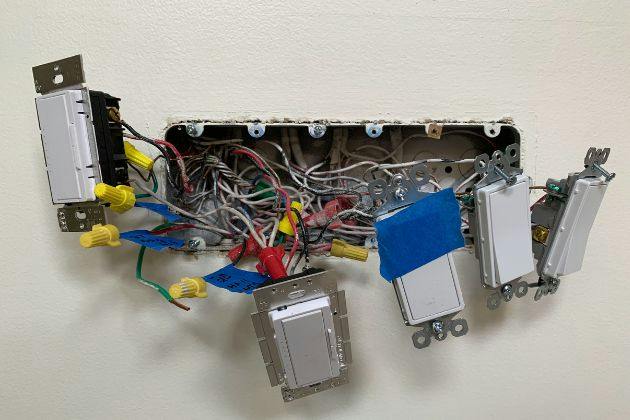
When a partial rewire may be suitable
A partial rewire can be appropriate when testing shows that most of the installation is in satisfactory condition, but certain circuits or areas need attention. This is often considered during a kitchen renovation, loft conversion, extension or when a consumer unit is upgraded and associated circuits need improvement.
Common areas to rewire first include kitchens, extensions, consumer unit tails and lighting circuits. These parts of a home are often altered, heavily used or affected by previous building work. A partial rewire should still be designed as a complete, safe improvement to the affected circuits rather than a quick replacement of whatever cable is easiest to reach.
An electrician may recommend this approach where the remaining circuits have sound insulation, suitable protective devices, effective earthing and bonding, and no evidence of unsafe alterations. It is not suitable simply because it appears less disruptive. The installation must be tested to confirm that old and new sections can safely operate together.
Sound existing circuits with acceptable test results
Localised damage or deterioration affecting specific areas
A renovation requiring new circuits in one part of the home
Clear cable routes that allow safe work without opening the whole property
Signs a full rewire may be safer
A full rewire is more likely to be recommended when defects are widespread, the wiring has been altered repeatedly or the condition of hidden cables cannot be confirmed. Old rubber insulation can become brittle and break down, while older PVC insulation may also suffer damage from heat, age, rodents or unsuitable installation conditions.
Missing or inadequate earthing and bonding is another serious concern. These protective measures help reduce the risk of electric shock, particularly where metal pipework, appliances or exposed-conductive-parts are present. Frequent blown fuses, tripping circuits, buzzing accessories, burning smells, warm sockets and flickering lights should also be investigated rather than treated as minor inconveniences.
DIY alterations can make a full rewire the more reliable option. Mixed cable types, loose connections, overloaded extensions, hidden junction boxes and circuits that do not match the consumer unit labelling can make future faults difficult to locate. If an electrician cannot verify the condition and continuity of large parts of the installation, replacing it may provide a safer long-term result.
Risks of leaving older circuits in place
Keeping part of an old electrical installation can limit future improvements and leave faults hidden behind walls, floors or ceilings. A new consumer unit does not automatically make every existing cable safe, and modern protective devices cannot correct damaged insulation, poor connections or missing bonding.
Older circuits may also have limited capacity for today’s appliances, including induction hobs, electric showers, home offices and electric vehicle charging equipment. Even if the installation is working, its design may not provide the flexibility or protection needed for planned changes. Any decision to retain circuits should be supported by inspection and test results, not appearance or age alone.
What an electrician will assess
An electrician will inspect the consumer unit, accessories, visible wiring and earthing arrangements before carrying out appropriate testing. They may check insulation resistance, continuity, polarity, earth fault loop impedance and the operation of residual current devices where fitted.
The condition of sockets, switches, light fittings and connection points also matters. The electrician will consider cable routes, signs of overheating or mechanical damage, previous alterations and whether circuits are correctly separated and protected. They will assess the installation against the current requirements of BS 7671 for the work being carried out, while recognising that an existing installation is not automatically required to meet every modern standard unless it is being altered or presents a safety risk.
Ask for a clear explanation of which circuits can remain, which need replacing and what limitations will apply. A professional recommendation should distinguish between immediate safety work, improvements needed for compliance and optional upgrades for future plans.
Planning rewiring in a lived-in home
Both partial and full rewires involve some disruption because cables may need access beneath floors, within ceilings or through walls. Before work begins, discuss access requirements, furniture protection, dust control and how power will be isolated. Valuable belongings should be moved from working areas, while floors and furnishings should be covered and secured.
Plan the work room by room where possible, starting with areas already due for decoration or renovation. Agree how long each stage is expected to take and arrange temporary power or alternative cooking and washing facilities if necessary. Good planning can reduce repeated disturbance, but safety should never be compromised to keep one room usable.
Paperwork after the work
On completion, you should receive an Electrical Installation Certificate for new work or a Minor Electrical Installation Works Certificate where the scope qualifies. The electrician should provide relevant schedules, test results and details of any limitations or recommendations. Where applicable, electrical work may also need building regulations notification, with the required compliance documentation issued through the appropriate scheme.
Keep this paperwork with your property records. It can help with future alterations, fault diagnosis and demonstrating that the work was inspected and tested by a competent professional.
Get advice based on your installation
There is no safe rule that says every older home needs a full rewire, or that a partial rewire is always enough. Resistance Electrical can inspect your installation, explain the technical findings and recommend a proportionate approach for your home.
To arrange an inspection or quote, call Resistance Electrical on 07935923323. You can also learn more about rewiring services or arrange testing and inspection before deciding how to proceed.